Rare disease × ageing science

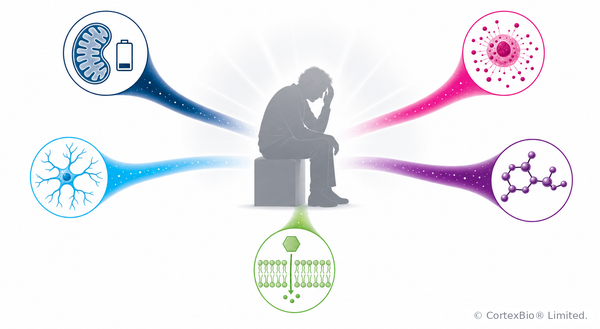
Ageing is a fatal inborn error of metabolism.

CortexBio works where rare metabolic disease and human ageing turn out to be the same problem — helping biotech and pharma turn that insight into therapies that reach patients.

METABOLIC SYNCHRONICITY TOOL© Synchronicity map
Synchronicity map — rare metabolic disease · shared pathway · age-related condition, drawn from the public demonstration datasetTry the demonstration
30 years across GenzymeGlobal Medical Director, Nephrology, Endocrinology & Rare Diseases AstellasEarly-Stage Medical Strategy Lead, Mitochondria & Rare Diseases AbbottStrategic Medical Director Critical Path InstituteFounding member, Rare & Orphan Disease programmes Biotech Trailblazers · Top Women Leaders 2025

The intellectual spine

A single idea, argued two ways.

Everything CortexBio does rests on one reframing: the mechanisms of ageing and of rare inborn errors of metabolism are pieces of the same mosaic. Two works make the case.

The thesis

Ageing as a fatal inborn error of metabolism

A reframing of human senescence through the lens of metabolic disease. The argument is not a position paper — it is made in peer-citable research, published with registered DOIs.

See the published research Read the plain-English summary
Book · with Publishing Agents

Unravelling the Metabolic Mosaic

Piecing together ageing and rare disorders for a healthier future — a diverse perspective. Dima's first book, translating three decades at bench and bedside into one connected picture.

Follow the work

The same idea, made watchable: see a day of metabolism play out

Published research

Cited, not claimed.

Each paper is deposited with a registered DOI — permanent, resolvable and citable. Author: Dima Martini-Drew, MD — ORCID 0009-0002-1060-9250.

White paper

Ageing Fatigue Subtypes: A Mechanism-Based Nomenclature and Translational Research Framework

Published 19 June 2026 · CC BY 4.0 · Open access

A mechanism-based naming system for the subtypes of fatigue in ageing, and a framework for taking it into translational research.

DOI 10.5281/zenodo.20764849
White paper

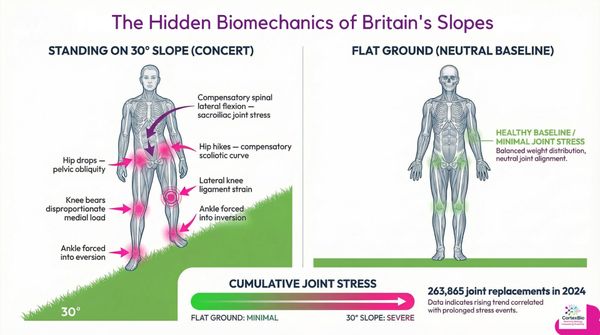
The ground beneath your feet: sloped venues, cambered pavements, and infrastructure decay accelerate metabolic ageing

Deposited 12 May 2026 · CC BY-NC-ND 4.0 · Under embargo

Everyday slopes and cambers as a population-level musculoskeletal and metabolic risk factor.

DOI 10.5281/zenodo.20140593

Embargoed to 8 Nov 2026 — the companion article is free to read now.

White paper

Precision Metabolic Health: The CortexBio Metabolic Mosaic Applied to Healthy Ageing

Published 14 August 2026 · CC BY-NC-ND 4.0 · Open access

A single-participant application of the Metabolic Mosaic framework — hypothesis-generating rather than confirmatory.

DOI 10.5281/zenodo.21891053

What we do

Consulting built on the science, not around it.

Strategic guidance and hands-on support across the rare-disease and longevity development journey — from first insight to regulatory submission.

Explore the toolMetabolic Synchronicity Tool©

  • Interactive network — Five curated metabolic synchronicities across rare-disease and ageing pathways, drawn as a live, explorable graph.
  • Maintained sources — Every pathway, gene and compound links straight through to its current KEGG, UniProt or PubChem record.
  • Drug repurposing view — See how existing compounds sit across the shared pathways — where one mechanism may serve several conditions.
  • Curated, not generated — Built on a reviewed dataset; nothing in the tool is invented by an algorithm.
Try the demonstration Start a conversation

What we doRare Disease Consultancy

  • Rare disease strategy — Approaches that address the scientific, clinical, regulatory and commercial considerations unique to rare diseases.
  • Orphan drug designation — Navigate the pathways and prepare applications across multiple jurisdictions.
  • Natural history study design — Robust studies that characterise progression and inform clinical development.
  • Registry strategy — Disease registries that generate valuable long-term insight.

Common questions

What does a rare disease consultancy do?

A rare disease consultancy provides strategic guidance to pharmaceutical and biotech companies developing treatments for rare and ultra-rare conditions. Services typically include drug development strategy, regulatory pathway design (including orphan drug designation support), natural history study design, patient advocacy engagement, and Target Product Profile development. CortexBio specialises in rare genetic and metabolic diseases, drawing on 30 years of experience across companies including Astellas, Abbott, and Genzyme.

What is orphan drug designation and how can CortexBio help?

Orphan drug designation is a regulatory status granted by the EMA and FDA to medicines targeting rare conditions. It provides benefits including market exclusivity, fee reductions, and protocol assistance. CortexBio supports companies in building the clinical and scientific evidence needed to qualify for designation, advising on the documentation, patient population definitions, and regulatory strategy required for successful applications.

How does CortexBio approach rare disease drug development differently?

CortexBio's approach is grounded in the metabolic biology shared between rare genetic disorders and broader disease categories including ageing-related conditions. This cross-disciplinary perspective — developed across four enzyme replacement therapy programmes — enables CortexBio to identify development pathways and patient population insights that a narrower specialist might miss.

Who does CortexBio work with?

CortexBio works with pharmaceutical companies, biotech companies, and investor groups focused on rare disease drug development. Clients typically include companies in early- to mid-stage development working in rare genetic metabolic disorders, lysosomal storage diseases, mitochondrial disease, and rare neurological conditions.

What experience does Dima Martini-Drew MD have in rare disease?

Dima Martini-Drew MD has over 30 years of rare disease experience across companies including Astellas, Abbott, and Genzyme Corporation. She has directed the launch of four enzyme replacement therapy programmes and is a founding member of the Critical Path Institute. Recognised as a Biotech Trailblazer by Global Healthcare Magazine in 2025. Home

Start a conversation

What we doLongevity & Age-Related Disease

  • Longevity science translation — Interpret ageing research for practical use in drug development and healthcare.
  • Age-related disease strategy — Targeted approaches for diseases of ageing built on current understanding.
  • Biomarker identification — Identify and validate biomarkers that accelerate development in age-related conditions.
  • Cross-therapeutic opportunities — Uncover shared mechanisms between ageing and specific diseases.

Common questions

What is the connection between rare diseases and ageing?

CortexBio's founding thesis — articulated in the white paper "Ageing as a Fatal Inborn Error of Metabolism" — is that ageing and rare genetic metabolic diseases share underlying biological mechanisms. The enzyme activity declines that characterise rare metabolic disorders also occur in normal ageing, reducing to 20–50% of youthful function by age 80. This reframing positions ageing not as an inevitable process but as a metabolic disorder amenable to the same therapeutic strategies already being developed for rare diseases.

What is longevity consultancy and who is it for?

Longevity consultancy at CortexBio means applying the strategic and scientific frameworks of rare disease drug development to the emerging field of longevity medicine and age-related disease therapeutics. It is relevant for pharmaceutical and biotech companies developing interventions targeting age-related metabolic decline, investors evaluating longevity assets, and healthcare innovators building clinical programmes in metabolic ageing.

What is the metabolic mosaic framework?

The metabolic mosaic is CortexBio's conceptual framework mapping the shared biological pathways connecting rare metabolic diseases and age-related decline. It maps the enzyme pathways, cellular mechanisms, and molecular processes that appear in both rare disease and normal ageing — and it is the analytical basis of CortexBio's longevity work.

Why does rare disease expertise matter for longevity drug development?

Rare disease drug development has produced the most rigorous small-population trial methodologies in medicine: natural history study design, biomarker-based endpoints, surrogate endpoint validation, and patient engagement frameworks that work without large patient populations. These are precisely the tools needed for longevity therapeutics, where patient populations are defined by biological markers, clinical endpoints are contested, and regulatory science is still being established.

Is there scientific evidence that ageing can be understood as a metabolic disorder?

Yes. The basis is documented in Dima Martini-Drew MD's white paper "Ageing as a Fatal Inborn Error of Metabolism," which draws on peer-reviewed research in enzyme biology, mitochondrial function, lysosomal storage, and cellular senescence. Key evidence includes the progressive decline of metabolic enzyme activity with age — mirroring the enzyme deficiencies seen in rare genetic metabolic diseases. The full white paper is available via CortexBio Insights. Home

Start a conversation

What we doClinical Development Readiness

  • Target Product Profiles — TPPs that align clinical development with commercial goals and patient needs.
  • Clinical development strategy — Pathways that balance scientific, regulatory and commercial considerations.
  • Study design optimisation — Trial designs tailored to rare and metabolic disease, including adaptive and framework approaches.
  • CMC readiness — A manufacturing strategy that keeps pace with accelerated clinical timelines.

Common questions

What is clinical development readiness for rare diseases?

Clinical development readiness means ensuring that a rare disease drug development programme has the scientific, strategic, and operational foundations in place before entering clinical trials. For rare diseases this is particularly demanding: patient populations are small, trial design is complex, natural history data is often limited, and regulatory pathways require early and careful navigation. CortexBio helps companies assess whether their programme is genuinely trial-ready and identify the gaps that need closing before committing to expensive clinical investment.

What is a Target Product Profile and why does it matter in rare disease?

A Target Product Profile (TPP) defines what a drug needs to achieve clinically and commercially to be viable. In rare disease, the TPP is especially important because regulators expect to see it early in development. It disciplines the programme around what actually matters to patients, clinicians, and regulators — and helps avoid costly development pivots later. CortexBio supports clients in developing and refining TPPs grounded in real-world rare disease evidence.

How important is natural history study design in rare disease development?

Natural history studies are often critical because they generate the baseline data needed to understand disease progression, define meaningful clinical endpoints, and design comparator arms when randomised controlled trials are not feasible. Regulators increasingly expect robust natural history data before approving trials in ultra-rare conditions. CortexBio advises on natural history study design and the integration of this evidence into regulatory dossiers.

When should a biotech company engage a clinical development readiness consultant?

The highest-value point is before Phase 1 or Phase 2 planning begins — when there is still time to shape the development strategy rather than course-correct it. Companies benefit most when they have a promising early-stage asset and need to define the regulatory pathway, identify the right patient population, design robust endpoints, and align clinical strategy with what regulators and payers will ultimately require.

How does CortexBio reduce risk in rare disease clinical programmes?

CortexBio reduces risk by applying experienced strategic judgement at the points where poor decisions have the highest cost: patient population definition, endpoint selection aligned with regulatory expectations, early regulatory engagement strategy, and realistic assessment of what a development programme can achieve given the available evidence. The goal is to identify the specific gaps that will cause problems at regulatory review — and resolve them before they become expensive. Home

Start a conversation

What we doPatient-Focused Drug Development

  • Patient experience data — Systematic approaches to gather insight that meets regulatory standards.
  • PFDD meeting support — FDA Patient Listening Sessions and externally led PFDD meetings.
  • Endpoint strategy — Endpoints that capture the outcomes patients care about.
  • Benefit–risk assessment — Patient preferences built into frameworks regulators and payers recognise.
Start a conversation

What we doAdvocacy

  • Strategic advocacy planning — Engagement strategies tailored to your therapeutic area, culture and stage.
  • Patient organisation mapping — Find and connect with the most relevant organisations for your focus.
  • Coalition building — Link researchers, clinicians, regulators and advocates into a working ecosystem.
  • Authentic partnership — Long-term, trusted relationships with patient communities.
Start a conversation

What we doEducational Activities

  • Workshops and symposia — Expert-led sessions on emerging topics in rare disease and metabolic health.
  • Training programmes — Customised training for clinicians, researchers and industry teams.
  • Educational resources — Accessible materials explaining complex mechanisms and therapies.
  • Knowledge translation — Scientific discoveries turned into practical information for every stakeholder.
Start a conversation

Not sure where you fit?

Tell us where you are in development and we'll point you to the right starting engagement.

Start a conversation

Who you're working with

Three decades turning rare-disease science into therapies.

Dima Martini-Drew, MD

Dima Martini-Drew, MD

Founder · Rare & Metabolic Disease

A biotechnology executive with over 30 years developing modalities for fatal rare and metabolic diseases — from discovery through launch. Her focus: applying strategic leadership and global collaboration to the scientific programmes that reach the patients others overlook.

  • 4Enzyme replacement therapy programmes launched for rare diseases, from early stage to market.
  • 1stNovel identification tools that led to treating the youngest Pompe disease patient — reshaping treatment guidelines.
  • FabryPioneered high-risk population testing for Fabry disease, advancing understanding of X-linked genetic disorders.
  • BBBLed development of small-molecule mitochondrial biologics targeting the blood–brain barrier for neurological diseases.
  • M&ALed medical integration teams through major pharmaceutical acquisitions, aligning medical strategy across organisations.
  • CNSLed cross-functional teams on clinical development strategy for rare neurological disorders — multiple successful product launches.
  • VoiceEstablished thought leadership in rare disease through public speaking and patient advocacy.

Already in production

A working tool, not a promise.

Parkinson's is typically recognised years after it begins, because its earliest signs surface across many specialties and no single clinic sees them together. CortexBio's Early-Identification tool gives every clinic the same checklist, the same risk score and a one-click referral letter. Live now — see it screen by screen.

PARKINSON'S EARLY-IDENTIFICATION Live
A multi-screen tool, in production · parkinsons.cortexbio.co.uk

Explore the science

Your body keeps a timetable.

Metabolism at nine in the morning is not metabolism at nine at night. Drag through a full day and watch the molecular clock hand its instructions on to the liver, muscle, gut and brain — and see why the same meal, dose or workout lands differently depending on when.

Get involved

Have a rare-disease or ageing programme that needs a different lens?

Whether you're planning first-in-human, refining a development strategy, or want the Metabolic Synchronicity Tool applied to your data — start the conversation.

We use your details only to reply to you — see how we handle your details.